A Foodie's Guide to Moroccan Cuisine in Agadir
Moroccan food doesn't ease you in gently. The first time a tagine arrives at the table — steam rising from the conical lid, the smell of cumin and preserved lemon cutting through — it tends to stop conversation entirely. The Souss region around Agadir brings its own character to a cuisine already famous for depth: Atlantic seafood, argan oil from UNESCO-protected forests, citrus from the valley, and a spice culture shaped by centuries of Saharan trade routes.
This guide covers the dishes worth seeking out, the street food to eat without hesitation, and the practical details that make the difference between a good meal and a genuinely memorable one — including how to time eating around a quad tour without regretting it on the piste. If you are also planning when to ride, pair this with our best season for quad biking in Agadir guide or our top 5 excursions in Agadir for a full trip blueprint.
Must-try dishes in Agadir
Tagine — the dish that defines Moroccan cooking
Named after the conical clay pot it's cooked in, tagine is slow-cooked patience on a plate. The most iconic version around Agadir is chicken with preserved lemons and olives — mellow, slightly sharp, with a depth of flavour that comes from hours over low heat. Lamb with prunes and almonds is the sweeter alternative. Both are worth trying at least once in a traditional setting rather than a hotel buffet, where the balance is rarely as precise.
Couscous — Friday's ritual, any day's pleasure
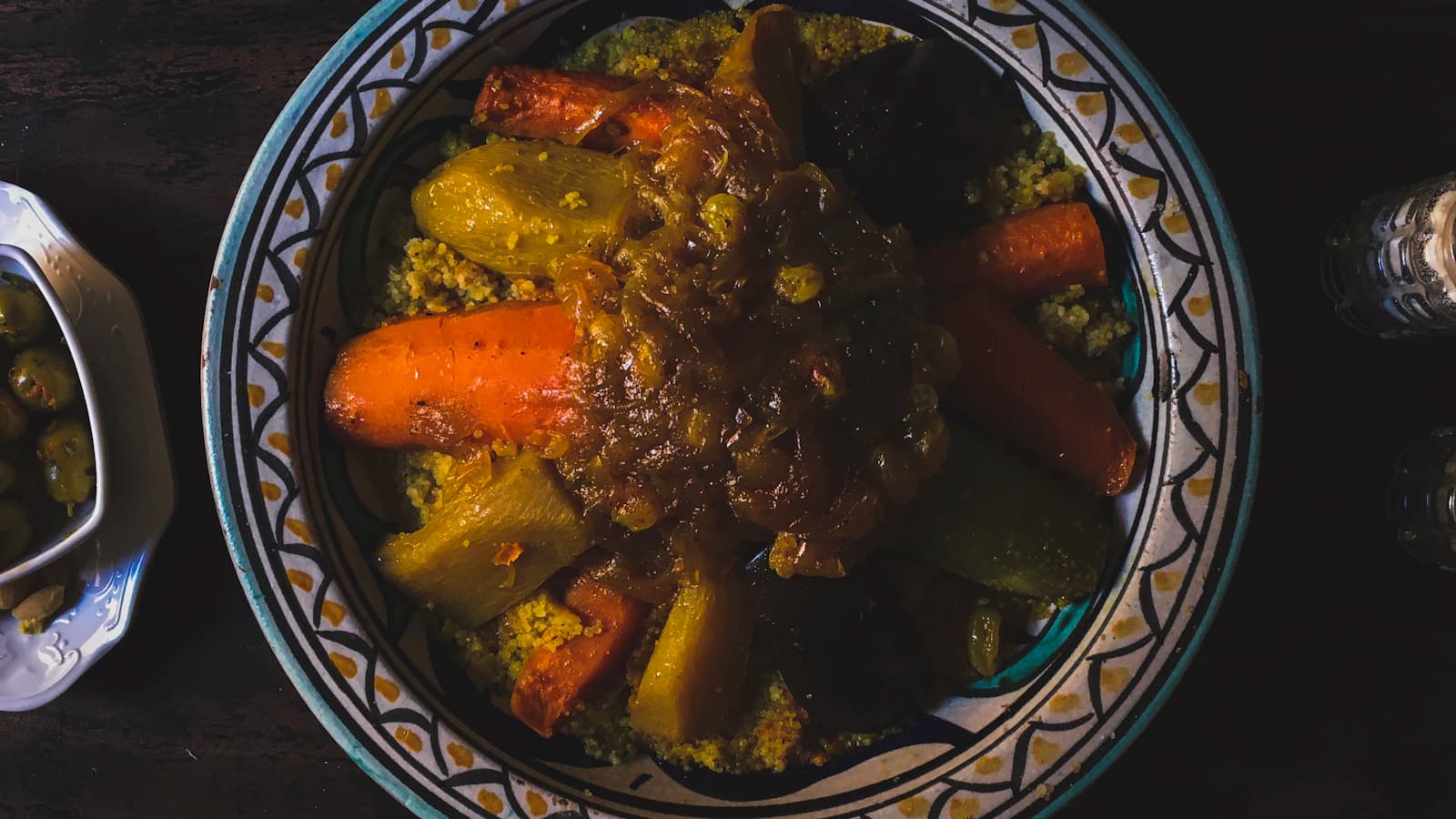
Traditionally served on Fridays across Morocco, couscous is fluffy semolina topped with slow-cooked vegetables and tender meat — usually lamb or chicken — with broth poured over at the table. The seven-vegetable version is particularly common in the Souss and makes an excellent meat-free option if you ask in advance. At its best, it's one of the most comforting dishes in North African cooking.
Pastilla — sweet, savoury, and unlike anything else
Pastilla is the dish that surprises almost everyone. A crispy warqa pastry shell filled with chicken or pigeon, dusted with cinnamon and powdered sugar — the sweet-savoury combination sounds unusual and tastes extraordinary. It takes time to make properly, which means it's more common at family gatherings and specialist restaurants than at casual eateries. If you see it on a menu, order it.
Harira — the soup that anchors a meal
A thick, tomato-based soup loaded with lentils, chickpeas, and fragrant herbs, harira is associated with Ramadan iftar but served year-round. It's warming, filling, and almost always available as a starter or light lunch option. Served with dates and a piece of chebakia (a fried pastry glazed with honey and sesame), it's a combination that makes sense the moment you try it.
Mechoui and grilled fish — coastal Agadir on the plate
Along the Atlantic coast, whole lamb roasted in deep pits (mechoui) appears at celebrations, while everyday dining leans on sardines, sea bream, and shrimp kissed with chermoula. Order grilled fish at a busy marina stall or a small port-town grill inland — the smoke, lemon, and cumin profile is distinctly Souss, not the milder hotel version many visitors expect.
Street food in Agadir — what to eat and where
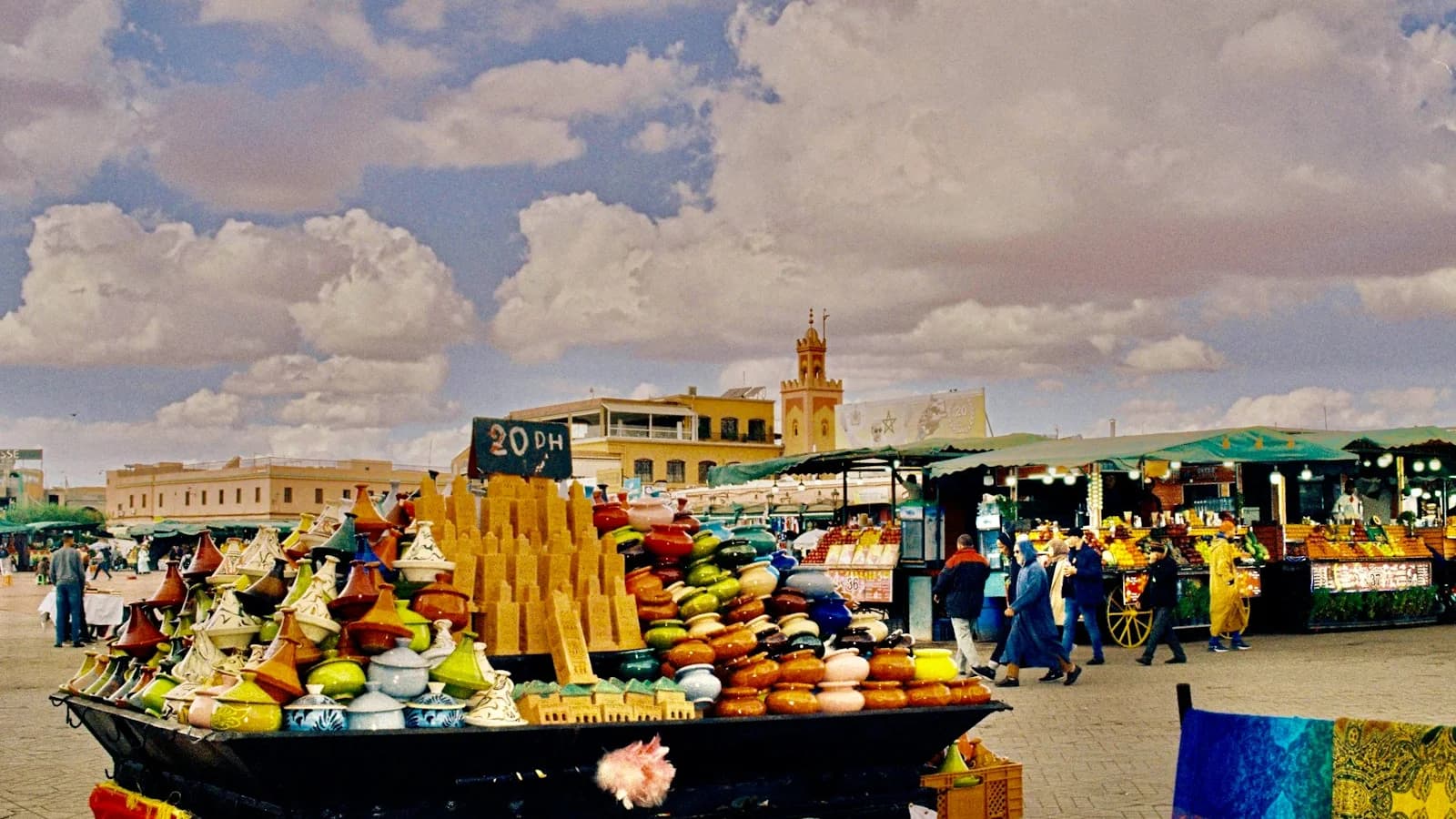
Agadir's Souk El Had is one of the largest markets in southern Morocco and one of the best places to eat standing up. The key is finding stalls with high turnover — busy means fresher, particularly for anything fried.
Msemen is the starting point. Flaky, pan-fried flatbread served hot, ideally with honey or a smear of argan oil — the local version of fast food that actually satisfies. Sfenj, the Moroccan doughnut, is crispy outside and almost pillowy inside; best eaten immediately and best found at stalls that fry to order rather than leaving them in a pile. Fresh-squeezed orange juice is available on almost every corner in Agadir and worth stopping for every time — the Souss valley produces some of the best citrus in Morocco.
Carry small dirham notes for street vendors who often can't break large bills. A busy stall is almost always a better sign than an empty one.
Regional specialities of the Souss — what makes Agadir different
The Souss valley's most famous export is argan oil — cold-pressed from the fruit of trees that grow nowhere else on earth at this scale, in a UNESCO Biosphere Reserve that stretches inland from Agadir. You'll find it at cooperative shops, in salad dressings, and as a finishing drizzle on tagines. The quality varies; buying directly from a women's cooperative gives you a better product and supports the communities that maintain the trees.
Along Agadir's marina promenade, grills serve Atlantic sardines, calamari, and shrimp seasoned with chermoula — a herb and spice marinade that's intensely flavourful without being heavy. A short drive inland, smaller towns offer home-style tagines made with seasonal vegetables and local produce that tend to be both more affordable and more personal than anything on the seafront.
Vegetarian, vegan, and allergy considerations
Moroccan food is more adaptable than it first appears. Many dishes can be prepared without meat if you ask clearly when ordering — "bidoun lahm" (without meat) is understood immediately. Couscous with seven vegetables is a classic Friday staple and naturally filling without any animal protein. Harira is typically made with a small amount of lamb; asking for the vegetarian version is usually straightforward.
Nuts appear in pastilla and some traditional desserts — mention any nut allergies to staff before ordering. Dairy shows up in buttered couscous and some yogurt-based sauces; vegan travellers should confirm the cooking fat before ordering. In general, the more local the restaurant, the more willing the kitchen is to adapt.
Timing meals around your Desert Wings excursion
This is the practical detail most food guides skip entirely. A heavy meal before a quad or buggy tour is a genuine mistake — bumpy piste terrain and a full stomach don't combine well, especially in the morning session.
If you have a morning quad departure at 08h30, eat a light breakfast — fresh bread, fruit, yogurt, mint tea — and save the bigger meal for after the ride. Full-day jeep safaris typically include a lunch stop; ask when booking whether it's a set menu or à la carte so you can plan accordingly. Sunset camel rides work best with an early dinner reservation afterwards, not before — arriving back from the coastline at golden hour and heading straight to a table is the ideal sequence.
Hydration matters more than most visitors expect, particularly on summer mornings. Even when meals include mint tea, carry water — it's caffeinated and welcoming, but not a substitute for plain water on a dusty piste.
Heading out on a Desert Wings tour? Our guides are happy to recommend trusted restaurants and street food stops that match your budget and spice tolerance after the ride. View our tours →
Dining tips from the Desert Wings team
After years of guiding visitors through the Souss landscape, a few things consistently make the difference between an average meal and a great one:
- Eat where locals eat. The most authentic food in Agadir is almost never on the seafront. It's in the streets around Souk El Had and the smaller restaurants that don't bother with menus in multiple languages.
- Ask about the day's special. In smaller kitchens, the dish made that morning with fresh market ingredients is always better than anything on the printed menu.
- Tipping around ten percent is appreciated in sit-down restaurants when service is not already included.
- Mint tea is an invitation, not a transaction. If someone pours you tea while you browse their shop or stall, it doesn't obligate a purchase — but it's worth pausing for.
Combine food and adventure. Our guides know the best local stops on every route. Book your quad or buggy tour in Agadir today. Book now →
FAQ — Moroccan food in Agadir
What is the best Moroccan dish to try first in Agadir?
Start with chicken tagine with preserved lemons and olives — the Souss classic. Pastilla, the sweet-savoury crispy pie, is the dish that surprises most first-time visitors. Order both in a traditional restaurant, not a hotel buffet.
Where is the best street food in Agadir?
Souk El Had is the main starting point. Choose busy stalls with high turnover, msemen and sfenj fried to order, and orange juice pressed in front of you from Souss valley citrus.
Is Moroccan food vegetarian-friendly?
Yes, with clear communication. Seven-vegetable couscous is widely available. Many tagines can be made without meat if you ask for bidoun lahm when ordering, not after.
Where can I buy authentic argan oil near Agadir?
Buy directly from a women's cooperative in the Souss-Massa UNESCO Biosphere Reserve. You get better culinary oil and support the communities maintaining the argan forests.
Is it safe to eat street food in Agadir?
Yes — busy stalls with visible preparation and hot fried food are generally safe. Desert Wings guides are happy to point out trusted spots on or after any tour.
What should I eat before a morning quad tour in Agadir?
A light breakfast of bread, fruit, yogurt, and mint tea works best before an 08:30 departure. Save the heavy tagine for after the ride; avoid fried food right before bumpy piste driving.
How much does a typical Moroccan meal cost in Agadir?
Street food at the souk often runs 20–50 MAD per item. A tagine at a local restaurant is typically 80–150 MAD. Marina restaurants tend to cost more without always matching the quality of inland kitchens.
Combine food and adventure
Our guides know the best local stops on every route. Book your quad or buggy tour in Agadir today.
View our tours